

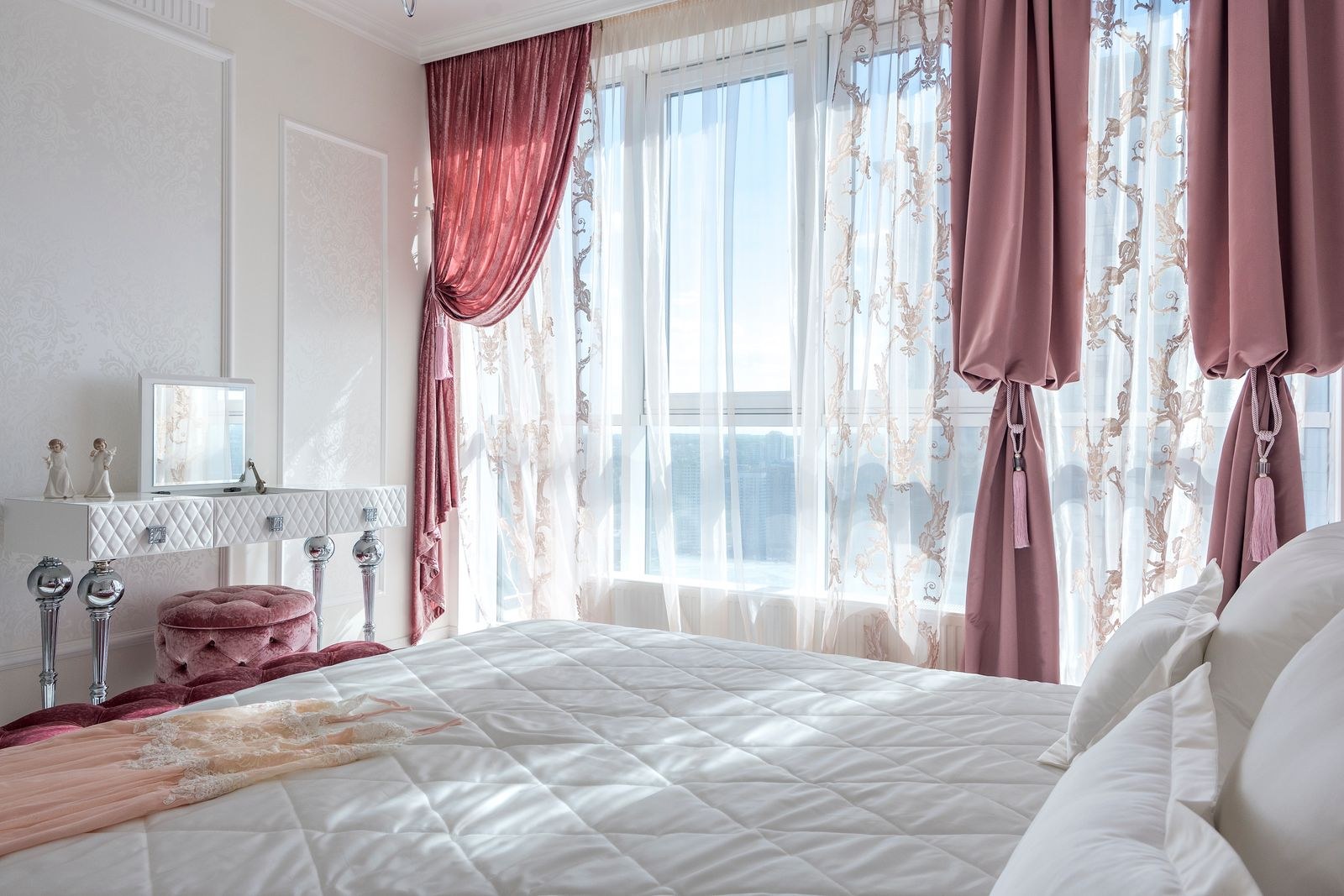
Shopping for curtains for bedroom windows is the one curtain purchase you should never make at noon. Daylight flatters every fabric. The thin linen panel that looks dreamy in the store becomes a glowing rectangle at 6 AM, right when you are in your deepest sleep, and the bargain blackout pair that promised “total darkness” leaks a bright halo around every edge because nobody measured the sides. Bedrooms are not living rooms: your curtains have one job at 11 PM and a different one at dawn, and most buying guides treat them like any other window. Here are nine rules for choosing bedroom curtains by the way you actually sleep, not by the way they look folded on a shelf.
Read More: Blackout Curtains That Actually Work: A Buyer’s Guide
What to Look For
Before you touch a fabric, get honest about your sleep. Total blackout is not a virtue. It is a prescription. If you sleep fine with a little morning glow, paying extra for 100% blackout buys you nothing but a heavier panel and a higher dry-cleaning bill.
1. Figure out your darkness tier first
Think in three tiers. Tier 1, “dim,” is for easy sleepers in north or west-facing rooms: room-darkening curtains that cut 70 to 80 percent of light. Tier 2, “dark,” is for light sleepers and street-facing windows: true blackout fabric, hung wide enough to cover the gaps. Tier 3, “cave,” is for shift workers and migraine sufferers: blackout fabric plus sealed edges.
Your window direction decides more than your preference does. An east-facing bedroom window in June gets direct sun around 5:45 AM in most of the US. If your window faces east, go one tier darker than you think you need. If it faces north, drop a tier and save the money.
2. Solve the two-sleeper problem before you buy
Here is the argument almost every couple has: one person wants the room pitch black, the other wants to see the morning light. One curtain cannot serve both of you, so stop trying. Hang two narrow rods side by side and give each sleeper their own panel, so one side stays shut while the other opens. Or layer a light-filtering sheer across the whole window with a blackout drape covering only the light sleeper’s half. The two-sleeper problem has never been solved by a single panel.
3. Triple-weave blackout panels
Pros: genuine 95 to 100 percent light blocking without a separate liner, easy to wash, and cheap for what they do. Cons: they look flat and a little plasticky up close, and cheaper ones develop a gray cast within a year. Buy them when: you are Tier 2 or 3 with a standard rectangular window, and you would rather spend the savings on a better rod. Skip them when: the bedroom doubles as a room you see in daylight all weekend, because you will stare at that flat weave every Saturday.
4. Room-darkening drapes (not blackout)
Pros: softer drape and better texture than triple-weave, and they take pattern and color beautifully. Cons: “room darkening” has no legal definition, so the label can mean anything from 60 to 90 percent blocked. Hold the fabric to a bright window in the store and look through it before you trust the label. Buy them when: you are Tier 1, or you want daytime looks with nighttime help. Skip them when: you need real darkness, because the 20 percent they let through always finds your eyes at 6 AM.
5. Sheer plus opaque layered sets
Pros: the only setup that is genuinely good at both jobs. Sheers soften daylight and give daytime privacy; the opaque layer closes at night. Cons: you are buying and hanging twice the hardware, and the window needs 6 to 8 inches of wall on each side for the stacked panels to clear the glass. Buy them when: the bedroom faces a street or a neighbor’s window, because daytime privacy is the problem sheers solve best. Skip them when: your walls give you under 4 inches of clearance on each side, because crammed layers look worse than one honest panel.
6. Thermal and insulated curtains
Pros: they genuinely cut heat gain through sun-blasted windows, which matters, because a bedroom that climbs past 75 degrees at night wrecks sleep faster than light does. Cons: the foam or acrylic backing cracks after repeated washing, so expect 2 to 3 years, not 10. Buy them when: the bedroom window faces south or west and the room bakes every afternoon. Skip them when: your window is shaded or north-facing.
7. Velvet drapes
Pros: the best-looking option in this list, genuinely good at muffling echo, and naturally room-darkening in dark colors. Cons: dust magnets, heavy enough to need a center bracket on any rod over 48 inches, and most cannot go in a home washer. Here is the honesty nobody gives you: velvet absorbs sound inside the room, which makes the bedroom feel quieter, but it barely blocks street noise coming through the glass. If traffic is the problem, the fix is window seals and glazing, not fabric. Buy velvet when: you want the room to feel cocooned and you will vacuum the panels monthly. Skip it when: anyone in the bed has dust allergies.
8. Linen and light-filtering curtains
Pros: beautiful, breathable, and the right choice for Tier 1 sleepers who love morning light. Cons: the night-privacy reversal. Light-colored linen that looks perfectly modest at noon turns nearly transparent after dark when your bedroom lamps are on and the street is dark. Anyone outside sees in. If you go linen in a bedroom, it must be lined, or layered over a shade. Buy them when: your bedroom is high up or faces a private yard. Skip unlined linen when: any window is visible from the street or a neighbor’s second floor.
9. Measure for the edges, not the middle
This is where almost every bedroom curtain fails, and it is the one rule worth memorizing. Light does not come through the middle of your curtains. It comes through the gaps: the halo at the top where the rod sits, the slivers at each side, and the strip under a too-short hem. Fix it with math, not fabric.
Mount the rod 4 to 6 inches above the window frame and extend it 8 to 10 inches past the frame on each side, so the panel stacks against wall, not glass. Size panels at 1.5 to 2 times the rod width: a 60-inch rod needs 90 to 120 inches of panel, or the fabric stretches flat and leaks at the pleats. Gathered panels eat 15 to 20 percent of the rod width as stack-back, so on a narrow window the open curtains still cover glass. For Tier 3 darkness, add wraparound returns: let the curtain turn the corner at each end so the sides seal against the wall. That step alone kills more light leak than upgrading to a more expensive fabric.
Simple idea: Before you buy anything, take a phone photo of your bedroom window at the exact time you usually wake up. Shop for the photo, not for the noon showroom. If the photo shows bright edges around your current curtains, you do not need darker fabric. You need a wider rod.
Budget Picks
You do not need to spend much to sleep dark. Here is what each tier honestly costs in the US right now, per window.
The budget tier, $30 to $60 per window, covers a pair of triple-weave blackout panels from Amazon brands like NICETOWN or Deconovo, plus a basic 1-inch rod from Target or Walmart for $15 to $25. This is genuinely enough for Tier 2 darkness on a standard 36 to 48-inch window. The rods are the weak link: a 1-inch rod holding heavy panels needs its anchors in a stud or a real drywall anchor, not the push-in plugs from the box.
The mid tier, $80 to $160 per window, gets you pinch-pleat or back-tab drapes from IKEA (the MAJGULL blackout line runs about $40 a pair and punches above its price), or velvet and linen-look panels from Target. Spend the upgrade money on the rod first: a 1.25-inch rod with a center bracket at $35 to $50 does more for the look and the light seal than a fancier panel on a flimsy rod.
The layered tier, $180 to $300 per window, is the sheer-plus-blackout double setup on a double rod, or custom-sized panels from a made-to-measure service. This is the tier for odd windows: sliding glass doors in a primary bedroom, bays, and anything over 72 inches wide, where ready-made sizes leave gaps no fabric can fix.
Buy in January, when holiday-home inventory clears, or in late August, when dorm-season curtains flood the discount racks. Both knock 25 to 40 percent off mid-tier lines. And wash whatever you buy before the first hang: new panels carry sizing and warehouse dust, and you will breathe next to that fabric for eight hours a night.
Conclusion
Bedroom curtains fail in predictable ways: wrong darkness tier, bright gaps at the edges, and one panel trying to serve two different sleepers. Fix the tier first, measure the edges with real numbers, and solve the two-sleeper problem with split control instead of compromise.
Do that and the fabric barely matters. A $35 blackout pair hung wide with sealed sides will out-sleep a $200 velvet panel hung tight to the frame every single night. Buy for 6 AM, hang for the edges, and your bedroom finally does the one job it has.
