

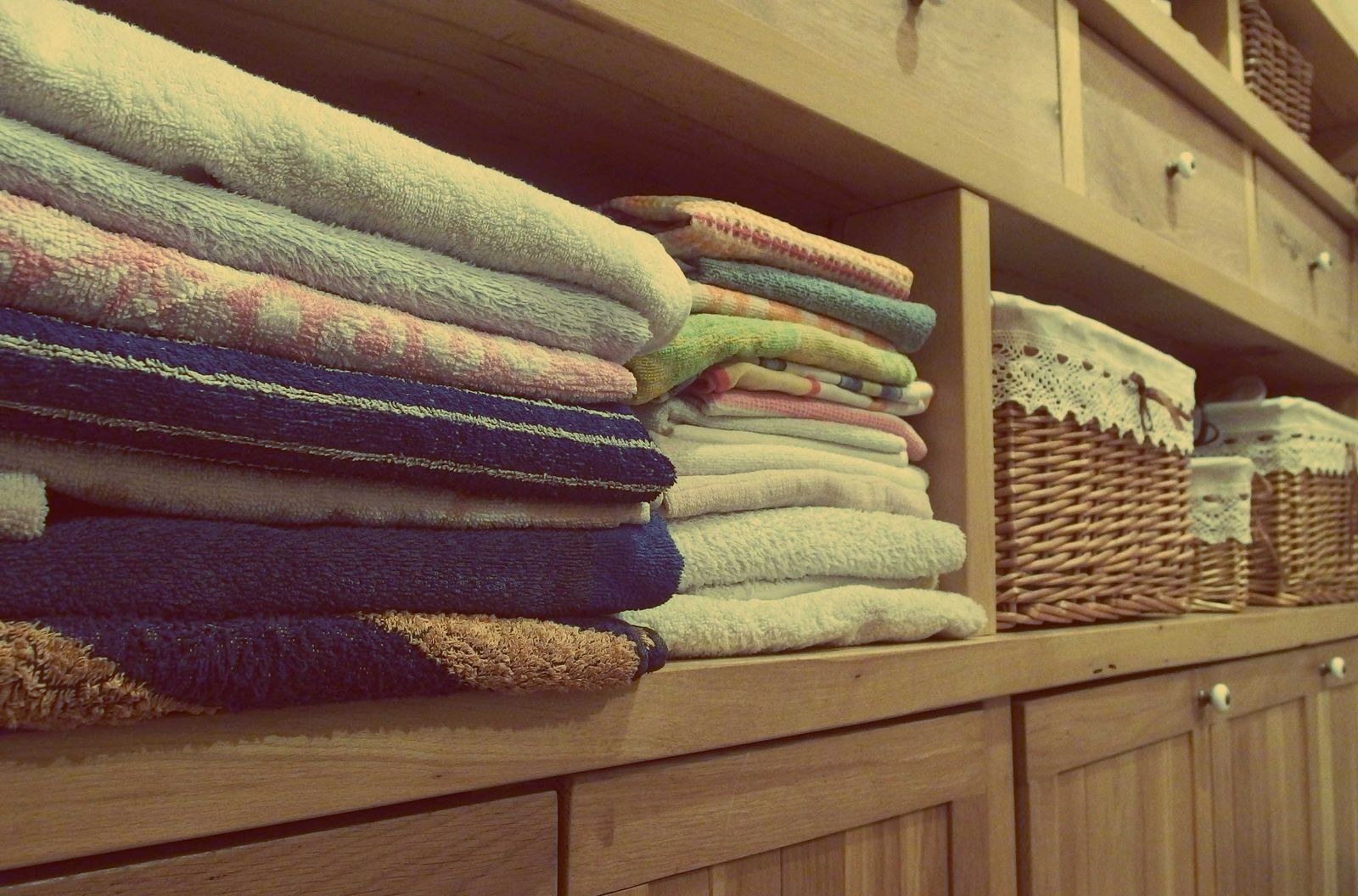
Small linen closet organization ideas usually start with the wrong advice: buy pretty baskets. That works for exactly one photo, and then the closet goes back to being the place where a fitted sheet lunges at you every morning. The real problem is not a lack of baskets. It is that nobody told you how much a small linen closet can actually hold once every shelf has a job, every stack has a boundary, and the closet can breathe.
This guide takes a different route. You will measure first, cut your stock down with a simple rule of two, zone the shelves so daily stuff lives at eye level, and fix the two things that make linen closets feel gross: toppling stacks and that faint musty smell. No renovation, no drill, and the whole project fits in a weekend afternoon.
Read More: 15 Pantry Organization Ideas for Small Kitchens
Start With the Tape Measure, Not the Shopping Cart
Before you buy a single basket, pull out a tape measure and write down three numbers: the depth of each shelf, the height between shelves, and the clearance behind the door when it closes. This is the step every competitor article skips, and it is why so many “organized” linen closets end with a basket that sticks out six inches and keeps the door from closing.
Most linen closets have shelves between 14 and 20 inches deep. Standard storage bins are 12 to 16 inches deep, which means the wrong bin leaves a dead zone at the back where things disappear. Measure first, then buy bins that match your actual depth within an inch or two. While you are at it, check the shelf type. If you have wire grid shelves, folded stacks will sag between the wires and small containers will tip. A peel-and-stick shelf liner (a 15-minute, renter-friendly job) gives you a flat surface and makes every other idea here work twice as well. Note the door swing too. Over-the-door organizers are wonderful, but a rack with deep pockets on a closet with a 24-inch door can stop it from shutting. Measure the gap between the door and the shelves when closed; you need at least two inches for a slim organizer.
Declutter With the Rule of Two
You cannot organize excess. Pull everything out, sort it on the bed, and be honest with three piles: keep, donate, rehome elsewhere in the house. The keep pile follows one rule: two of everything per use. Two bath towels and two hand towels per person. Two sheet sets per bed, one on the bed and one in the closet. One extra blanket per season you actually use.
Towels that are stained or scratchy get demoted to cleaning rags. Sheet sets missing a pillowcase get retired. Medicines and first-aid supplies get an expiration check right now, because a linen closet is a classic spot for a first-aid kit and half of them contain supplies from a different decade. Bulky off-season blankets do not belong here at all. Vacuum-seal them and store them under a bed or on top of a wardrobe. Check what stays: animal shelters and donation centers genuinely welcome old towels and bedding, so the donate pile has somewhere good to go.
Give Every Shelf a Job
Zones are what separate a tidy closet from one that is tidy for a week. Assign shelves by how often you reach for what is on them, and then label the edge of each shelf so everyone in the house follows the system without being told twice.
Top shelf is for the rare stuff: guest bedding, off-season blankets in vacuum bags, the good tablecloth you use three times a year. Eye level, and one shelf below it, belong to the daily drivers: current sheet sets, the towels you grab after every shower, fresh pillowcases. The lowest shelf takes backstock and the less glamorous items: extra toilet paper, travel-size toiletries, the iron you never use but cannot throw away. If medicines or first aid live in this closet, they get their own small labeled bin on a high shelf, out of reach of kids, and never loose on a shelf where a bottle can roll behind a towel stack.
Here is the part most guides miss. On deep shelves, create front and back zones: daily grabs in front, true backstock behind them, separated by a shelf divider or a shallow basket acting as a wall. Otherwise the back half of the shelf becomes a burial ground where you find things you bought twice. Your bathroom overflow has the same problem, so if you are on a roll, borrow the zoning logic from Over-the-Toilet Storage Ideas for Small Bathrooms and apply it there too.
Simple idea: store each full sheet set inside one of its own pillowcases. Fold the fitted sheet, the flat sheet, and the spare pillowcase into a neat rectangle, then slide the whole bundle into the remaining pillowcase. You grab one package and you have a complete set. No mystery sheets, no orphan pillowcases, and the shelf looks instantly uniform.
The Folding Tricks That Double Your Space
Fitted sheets are the reason linen closets look chaotic, and they are genuinely hard to fold until someone shows you. Hold the sheet lengthwise with your hands inside the two top corners, pockets facing out. Bring your right hand to your left, tucking the right corner into the left one. Repeat with the bottom corners so all four corners nest into one L-shaped pocket. Lay it flat, fold into thirds lengthwise, then thirds again. You get a rectangle the same shape as your flat sheet, which is the whole point: uniform rectangles stack, lumpy blobs do not.
Towels earn a spa-style fold. Fold the bath towel in half lengthwise, then in half again lengthwise, then into thirds from one end. You get a compact rectangle that stands neatly with the fold facing outward, and it takes up noticeably less shelf height than the standard “fold in half and hope” method. Hand towels and washcloths are better rolled than folded in a small closet. A basket of tight rolls looks like a hotel display and lets you pull one without disturbing the rest, which is exactly what falls apart with loose stacks.
Baskets, Dividers, and the Back of the Door
Once the decluttering is done and the zones are set, containers earn their place. The small, groupable items are what create visual noise: washcloths, spare pillowcases, first-aid bits, the travel shampoo collection. Those go in baskets. Sheets and bath towels, folded into their uniform rectangles, do better as open stacks, where you can see and grab them instantly.
Choose basket material with intent. Woven seagrass or wicker looks warm on visible shelves and holds rolled towels beautifully. Clear acrylic bins are the right call for medicine, bandages, and small toiletries because you can see at a glance when you are running low. Fabric bins with rigid frames suit deep shelves since they hold their shape when you stack things on top. Whatever you pick, buy narrow and deep rather than wide and shallow for a small closet. You get more storage per shelf and the stacks stay tidier.
Shelf dividers are the cheapest upgrade in this whole project and the one most people skip. A slim acrylic panel that clips onto the shelf edge keeps your queen-sheet stack from slowly leaning into your hand-towel stack and starting a slow-motion avalanche. Place them between categories, between bed sizes, and on deep shelves between the front daily zone and the back backstock zone.
The back of the door is bonus real estate, but only if you respect the clearance number you measured at the start. A slim over-the-door rack with clear pockets is perfect for washcloths, extra toilet paper rolls, and small first-aid items. Skip the deep-wire versions unless you confirmed the door still closes. For renters who want zero hardware, command-style hooks hold a surprising amount: a hanging mesh organizer for small items, or a couple of hooks for the lint roller and the spare shower curtain.
Fix the Mustiness Before It Starts
Here is the gap almost nobody talks about. Linen closets are small, enclosed, and often sit next to bathrooms, which makes them musty-smell factories if you seal them shut. Freshly folded laundry carries a little residual moisture, and a tightly packed closet with no airflow turns that moisture into a smell you notice every time you open the door.
The fix is mostly airflow, not fragrance. Do not pack shelves wall to wall. Leave an inch or two of breathing room at the back of each shelf. Toss a few silica gel packets or a bamboo charcoal bag on each shelf; they absorb moisture silently and recharge in the sun every few months, unlike scented sachets that just cover up the problem. Cedar blocks are worth adding if you store any wool blankets, since they deter moths without fighting your laundry scent. And always let laundry cool and dry completely before it goes back in. A slightly warm towel folded straight from the dryer is the number one cause of that damp closet smell, and it is entirely preventable.
The small linen closet budget, done sensibly:
- Peel-and-stick shelf liner (renter-friendly, one roll covers most closets): $15
- Set of 4 slim acrylic shelf dividers: $18
- 2 woven baskets for rolled towels and washcloths: $30
- 2 clear bins with lids for medicine and toiletries: $22
- Slim over-the-door organizer (after measuring clearance): $25
- Label maker or kraft tags and twine: $12
- Bamboo charcoal bags (pack of 4): $14
- Vacuum storage bags for off-season blankets (pack of 4): $20
Total: around $156 for a closet that holds twice as much, smells fresh, and stays organized without weekly maintenance. Most of these pieces move with you, so renters are not throwing money at someone else’s closet.
Conclusion
A tiny linen closet does not need more stuff bought for it. It needs less stuff kept in it, measured shelves, zones by frequency, folding that actually stacks, and air to breathe. Follow that order and the closet stops being the shelf you avoid. It becomes the one corner of the house that quietly works.
Do the decluttering this weekend and you will feel the difference by Monday morning. No more sheet avalanches, no more mystery pillowcases, and no more holding your breath when guests ask for a spare towel.
