

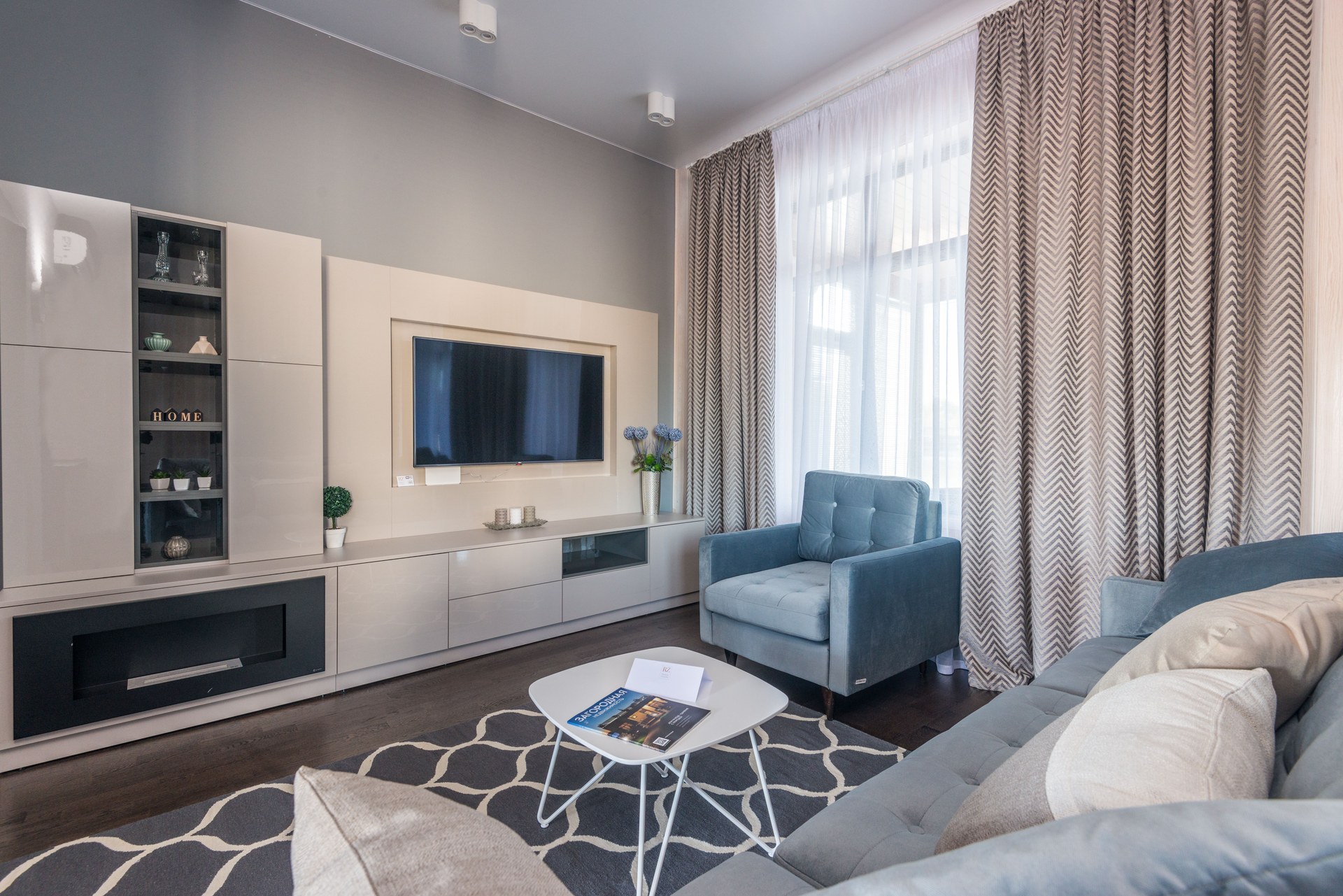
Shopping for curtains sounds simple until you are standing in the aisle (or scrolling at midnight) facing forty kinds of panels that all look the same. Most buying guides list fabric types and walk away. They skip the numbers that actually decide whether your windows look tall and generous or short and sad. Here are the fabrics, exact measurements, heading styles, and honest budget picks that make rooms look bigger.
Read More: 7 Curtain Hanging Mistakes That Shrink Your Windows
What to Look For Before You Buy
Start with the job, not the fabric: how much light do you want in, how much privacy do you need, and what does the room ask of you? A bedroom facing a streetlight needs blackout. A living room with one good window needs light first, privacy second. A kitchen needs fabric that survives steam and splatter.
Once you know the job, fabric becomes easy. Cotton and linen breathe and look relaxed but wrinkle and can shrink in the wash. Polyester blends resist wrinkles, fading, and shrinking, which is why they own the budget shelf. Velvet blocks light and adds drama but collects dust and needs a strong rod. Silk looks gorgeous, costs accordingly, and fades fast in direct sun.
Here is a contrarian take: spend your money on width before fabric. A cheap $20 panel bought wide looks rich. A $70 linen panel bought too narrow hangs flat against the glass and looks like a compromise. Fullness is what reads as expensive.
Curtain Types: Pros and Cons
Sheers
Featherweight panels that soften daylight and blur the daytime view from outside. They do almost nothing for privacy after dark (your silhouette shows with lights on).
- Best for: living rooms, sunrooms, layering behind heavier panels
- Watch out for: they look best layered; alone on a big window they can seem unfinished
Cotton and Linen Panels
The workhorse choice. Medium weight, casual, machine washable in most cases. Linen wrinkles beautifully (or terribly, depending on your taste). Both can shrink 3 to 5 percent in the first wash, so buy pre-shrunk or size up.
- Best for: bedrooms, living rooms, dining rooms
- Watch out for: fading on south and west-facing windows; rotate or choose lighter colors there
Blackout Panels
Usually polyester with a foam or triple-weave layer that blocks 95 to 100 percent of light. Great for bedrooms, nurseries, and shift workers. Be honest about one thing: light still leaks around the sides and top unless you address the gaps (more on that below).
- Best for: bedrooms, media rooms, street-facing windows
- Watch out for: dark colors absorb heat; in hot climates pick light-colored blackout
Thermal Panels
Blackout’s cousin, with an extra insulating layer. They genuinely help drafty single-pane windows, cutting some heat loss in winter and heat gain in summer, but they will not fix a truly drafty window alone. Treat them as insulation’s assistant, not the insulation.
- Best for: drafty older apartments, rooms with single-pane glass
- Watch out for: heavy; rod and brackets must be rated for the weight
Velvet Drapes
Maximum drama, maximum light blockage, maximum dust collection. Velvet panels look best floor-length with deep folds, which means buying them wide. They need a sturdy rod (at least 1 inch diameter for wide spans) and brackets anchored into studs or with proper drywall anchors.
- Best for: formal living rooms, master bedrooms
- Watch out for: steam, don’t iron; vacuum monthly
The Numbers: Width, Length, and Rod Placement
This is the section competitors fumble, so here are the exact rules.
Width. Measure the window frame edge to edge. Multiply by 1.5 for a tailored look, by 2 for full gathers. A 48-inch window wants 96 inches of total panel width for that gathered look, which is usually two 48-to-54-inch panels. Panels sold in pairs list the width of ONE panel, so read the fine print before you buy.
Rod extension. Mount the rod 4 to 6 inches above the window frame (or closer to the ceiling for the tallest illusion), and extend it 8 to 10 inches past the frame on each side. That extra wall space is stacking space, where panels live when open. Without it, panels cover part of the glass even when “open,” and your window looks smaller all day.
Length. Buy from these standard drops: 63 inches (sill length, kitchens and small windows), 84 inches (standard 8-foot ceilings), 95 or 96 inches (9-foot ceilings or rods mounted high on 8-foot ceilings), 108 inches (dramatic, high rods). For floor-length panels, measure from the rod to the floor and choose the closest standard size; panels that hover half an inch above the floor collect less dust, while panels that just kiss the floor look more polished. Puddling (an extra 1 to 3 inches pooling on the floor) is romantic and completely impractical with pets or daily use. For blackout panels, pick wrap-around rods (the ends curve back to the wall) or mount closer to the ceiling to kill the light leaks at the sides and top.
If your window sits above a radiator, choose apron length (ending 4 to 6 inches below the sill) so fabric never touches hot metal. And if the radiator itself is an eyesore, you can hide that ugly radiator without losing the heat while keeping warm air flowing.
Heading Styles: Match the Top to How You’ll Use Them
The heading is how the panel attaches to the rod, and it decides whether opening your curtains is a pleasure or a chore.
Grommets (metal rings). Glide smoothly, look modern, handle daily use. The best choice for panels you move every day; the rings show, so match the finish to your other hardware.
Back tabs. Fabric loops hide the rod for a clean look and glide nearly as well as grommets.
Pinch pleats. Structured, formal, classic. They need rings with clips or hooks and hold their folds beautifully.
Rod pockets. A sewn sleeve slides over the rod, and here is the honest part: rod pockets are the worst heading for anything you touch daily, because the fabric bunches and drags. Buy rod pocket only for panels that stay put (side panels, sheers you never move). Renters love them because they work on cheap rods, but grommets on the same rod make daily life easier.
Ripple fold. Even S-shaped waves on a track system, the hotel-polished look. It needs a track rather than a rod, which costs more but glides like nothing else.
Simple idea: Buy the heading for your habits, not your Pinterest board. If you close the bedroom curtains every night, grommets or back tabs still feel fine in year three. A rod pocket you fight daily ends up permanently open, which defeats the purpose.
Budget Picks: What Each Price Actually Gets You
Prices are per panel in the US, standard 50-to-54-inch widths.
$15 to $25: the basics that work. Think big-box polyester or cotton-blend panels. They hang fine, come in dozens of colors, and survive the washing machine. You give up thicker fabric, neat hems, and longer lengths (usually just 63 and 84 inches). For renters and first apartments, this tier is completely respectable, especially bought wide.
$30 to $60: the sweet spot. Mid-weight fabrics, better stitching, more length options (95 and 108 inches appear here), and linings that actually block some light. This is where blackout panels worth buying start. If you can stretch to this tier for bedrooms, do it.
$80 and up: premium ready-made and semi-custom. Heavier fabrics, real lining, pattern-matched seams, and sizes for tall or wide windows. Above this lies full custom, for odd-sized windows or when nothing ready-made fits.
The hardware rule. At the budget end, the rod matters more than the fabric. A $15 panel on a sturdy $30 rod with properly anchored brackets looks intentional. A $60 panel sagging in the middle of a flimsy tension rod looks like a dorm room. Extendable rods rated for at least 20 pounds per bracket pair handle most panels; thermal and velvet need more.
Renters, read this. If you cannot drill, use heavy-duty adhesive hooks rated for the panel weight (subtract a third from the rating for safety), tension rods inside the frame for sheers, or a ceiling track with removable adhesive. Anything over about 5 pounds per side wants real brackets, so keep heavy drapes for windows you can drill into.
Washing and Care (the Part Nobody Reads Until It Is Too Late)
Wash cotton and linen twice a year in cold water and expect 3 to 5 percent shrinkage on the first wash unless pre-shrunk. Polyester can go a year between washes. Vacuum velvet monthly and steam wrinkles out. Never hot-dry foam-backed blackout panels; the backing cracks. One careless cycle can turn a $50 panel into a $50 lesson.
Conclusion
Choosing curtains comes down to three decisions: the job (light, privacy, insulation), the numbers (width times 1.5 to 2, rod 4 to 6 inches above and 8 to 10 past the frame, length matched to your ceiling), and the heading that fits your habits. Get those right and even budget panels look like a design choice.
Skip the guesswork and the too-short, too-narrow panels that shrink every window they touch. Measure once, buy wide, hang high, and let the rod do the heavy lifting. Your rooms will look taller the same afternoon you hang them.

1 Comment
Pingback: Blackout Curtains That Actually Work: A Buyer's Guide