

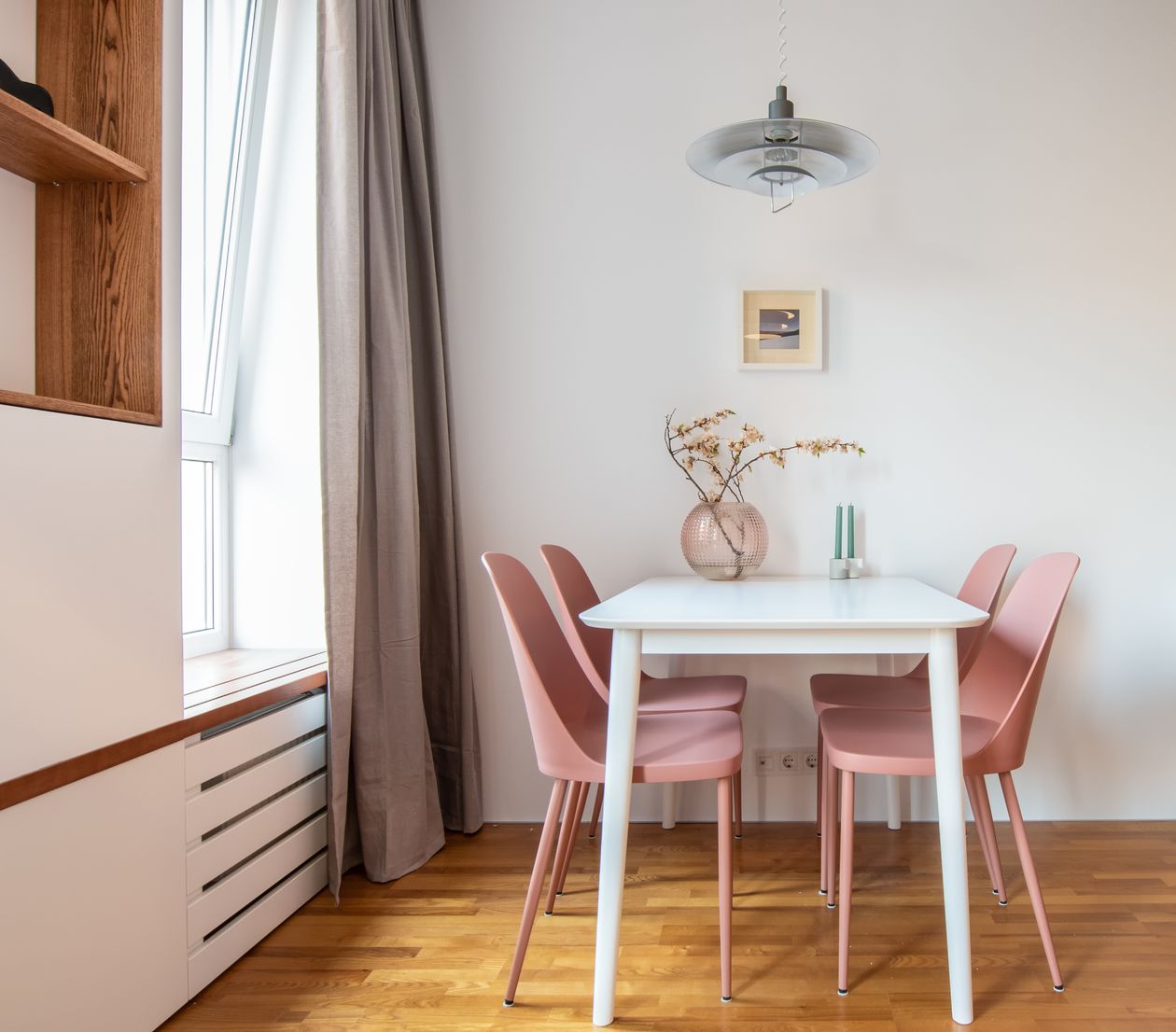
You do not need a formal dining room to enjoy a beautiful place to eat. With the right small dining room decor ideas, even an apartment corner can become a spot you look forward to using every day.
Apartments often squeeze the dining area into whatever space is left — a living room corner, a kitchen wall, or a nook by the window. The good news is that a smaller space is easier and cheaper to decorate, and a well-styled nook can feel more charming than a big dining room.
Treat your dining corner like any other room. Choose furniture that fits, add warm light and texture, and keep it personal. These practical ideas will help you create a dining spot that feels intentional, comfortable, and completely yours.
Read More: Simple Ways to Make Every Room Feel Like Home
Choose Furniture That Fits the Space
Start with the single most important step: measure your nook before you shop. Note the width of the walkway around the table — you need at least 24 inches behind each chair so people can sit and stand comfortably. A table that is two inches too wide can turn a cozy corner into an obstacle course.
Round tables are the classic small-space hero. Without sharp corners, they are easier to walk around, and a 36-inch round table seats four comfortably in a footprint a rectangular table cannot match. If you need flexibility, a drop-leaf or gateleg table is even better — keep it folded against the wall for daily use and open it up when guests come over.
Storage benches pull double duty. Tucked against a wall, a bench seats two people, holds table linens and board games inside, and slides fully under the table when you are done. Pair it with two chairs on the open side and you have seating for four in a very small footprint.
Choose chairs that disappear when you do not need them. Armless dining chairs tuck completely under the table, and stackable or folding styles can live in a closet between dinner parties. If you love the look of upholstered seating, pick a wipeable fabric — small spaces and spills go hand in hand.
Simple idea: Sketch your layout on paper with real measurements before buying — ten minutes of planning prevents expensive mistakes.
Dress the Walls Without Damaging Them
Bare walls make a dining nook feel like an afterthought. The fix does not require drilling a single hole. Peel-and-stick wallpaper or large wall decals can create an accent wall in an afternoon and remove cleanly when you move out. Choose one wall — usually the one behind the table — to keep the look intentional rather than busy.
Mirrors are a small dining room’s best friend. A large mirror opposite a window bounces daylight around the space and visually doubles its size. Lean a tall mirror against the wall if you cannot hang anything, or use damage-free adhesive strips rated for the mirror’s weight.
Floating shelves add both storage and style. A pair of slim shelves above a sideboard or bench can hold plants, cookbooks, and a few pretty dishes, freeing up precious cabinet space. Finish the look with plug-in wall sconces — they give you that built-in, hardwired look with nothing more than an outlet and a cord cover. For more inspiration on arranging tight layouts, explore these room ideas that make small spaces feel like home.
Finish with one personal touch. A small gallery of framed prints or family photos above the sideboard makes the nook feel like yours, not a furniture showroom. Keep the frames in one finish — black, natural wood, or brass — so a mix of art still looks pulled together.
Get the Lighting Right
Nothing transforms a dining corner faster than good lighting. Overhead fluorescents or a bare bulb make food look unappetizing and the space feel temporary. A single pendant light hung 30 to 36 inches above the tabletop creates a warm pool of light that defines the dining zone and flatters everything beneath it.
Renters are not stuck with the fixture that came with the apartment. Plug-in pendant lights hang from a ceiling hook and run down the wall to an outlet — no electrician needed. Choose a warm-white bulb around 2700K for a cozy glow that makes weeknight dinners feel special.
In the evenings, layer in candlelight or a small table lamp on a nearby sideboard. Dimmable bulbs are worth the small upgrade — bright light for work-from-home lunches, soft light for dinner. If your nook has a window, keep the treatment simple: a linen shade or sheer curtain lets daylight do the work during the day.
Simple idea: Swap the bulb over your table for a warm-white dimmable one — the cheapest upgrade with the biggest impact.
Style the Table Simply
A styled table is what separates a dining nook from a place where you happen to eat. Start with a runner — it adds color and texture down the center of the table without the bulk of a full tablecloth, and it protects the surface from scratches and heat marks.
Keep the centerpiece low and simple so it never blocks conversation. A small vase of fresh or faux greenery, a bowl of fruit, or a trio of candles in different heights is plenty. The rule of thumb: if you have to move it every time you sit down to eat, it is too big.
Let your table do double duty without looking cluttered. A tray can corral salt, pepper, and olive oil into one tidy cluster that reads as decor. When the table needs to become a workspace, everything lifts away in one motion — and the runner underneath keeps it looking like a dining room, not a desk. To pull the whole apartment together, these simple room ideas work in every space.
Add Storage That Looks Like Decor
Small dining rooms rarely have a closet nearby, so storage has to earn its place visually. A slim sideboard or console against the wall holds placemats, serving dishes, and candles behind closed doors — and its top becomes a serving station or coffee spot when you entertain.
A bar cart is the hardest-working piece of small-space furniture you can own. Roll it beside the table for dinner parties, park it in a corner as a styled display the rest of the week, and wheel it into the kitchen when you need extra counter space. Style it with a small plant, a stack of napkins, and your prettiest glasses.
Use the vertical space you are ignoring. A tall, narrow shelving unit in an unused corner can hold cookbooks, pantry overflow, or a small printer without eating floor space. Woven baskets on the shelves hide the less pretty stuff while adding the warm texture that makes a nook feel finished.
Even the back of a door can help. An over-the-door rack holds table linens and placemats, while a slim rolling cart beside the table keeps drinks, napkins, and serving spoons within reach during meals and tucks away after.
Conclusion
Treat your dining nook like a real room, and it will start to feel like one. Run through this quick checklist before you call the project done:
- Furniture scaled to the space — measure first, buy second
- One defined light source over the table
- Something beautiful on the walls
- A simply styled tabletop
- Storage that hides the clutter
Once the bones are right, let the space evolve with you. Swap the runner with the seasons, try a new centerpiece from the farmers market, or restyle the shelves when the mood strikes. A small dining room rewards attention more than money — give it a little of both, and it will give back every single day.
